ACE CAFE RADIO

    vendredi 27 juin 2014

    EDWIN’S BMW SIDECAR


    Edwin Mensink BMW 5
    We’ve featured many custom R series Beemer’s, but a sidecar is a first for us, and it has to be one of the coolest combi’s we’ve seen. Built by Edwin Mensink from the Netherlands along with some help from friends. Edwin is a salesman working for a GPS specialist company and seems to know his way around a bike, just as his products do around the roads. Like most GPS units, he found his skill-set limited at times and needed help from friends and experts along the way, just like when I refer to my map!
    Edwin Mensink BMW 3
    After entering a BMW R1100GS into a street fighter Edwin won. When he was introduced to the sidecar community, and had a go on one, he knew he had to build his own, but with a very low budget available it wasn’t going to be a quick build; finding the right bike, sidecar and parts is timely enough without having to watch the pennies.
    Inspired by an R75/5 sidecar combination, Edwin decided an R series would be his donor bike, but he wanted something older, and with a bit more grunt, so a 1975 R90/6 was found, but it was a daily driver and looked pretty tatty, and nearly wasn’t bought; but a friend gave some advice on the bike and a stonking deal was struck, then to top it off; it actually turned out to be a great base for the build. Edwin had the foresight to take measurements of the fork/swingarm of the R75/5 when he first saw it, so these measurements would be the guide to his bikes front end transformation.
    Edwin Mensink BMW 2
    The front fork with swingarm was built by the owner of vgmotorcycle.com, at first Edwin thought he was going to do it himself, after all it was just a bit of pipe bending… right? Absolutely not, computers, measurements and drawings all took place ahead of the final product, and it’s a stand out feature, so we’re as pleased as Edwin that he went with the pro’s; he may still be bending pipe other wise!
    Edwin Mensink BMW 1
    The sidecar frame is from Stoye and is early 1960′s, but the sidecar itself is a Walter Wünsche from the 50′s, it wasn’t in the best condition and needed a new floor and a complete back plate. The base is wooden, probably a commonly used material for this kind of thing back in the 50′s. The sidecar had a car battery mounted weighing about 10kg and steel plating underneath, weighing about 16kg, this extra weight gives the combination good stability and cornering.
    Lines and details are very important to Edwin, whether it be the location of the seat between the engine and rear wheel or the flow of the fenders or the handlebars being a low height so as not to rise too far above the tank; all this gives a low and wide profile, and with a mere 12cm ground clearance it’s lower than you realise thanks to the Ikon suspension and a Hagon shock mounted to the sidecar.
    Edwin Mensink BMW 6
    The paint on the tank and headlamp is the original blue and the sidecar is obviously left in plain aluminium apart from the painted lady, but Edwin likes showing the new v’s the old, so the replacement floor stands out making its own statement. The bike seat as well as the cockpit of the sidecar have been treated to a thick brown leather, which was sanded to make lighter and give a near Nubuck look, the edges of the cockpit also received some leather detailing making the look of an old open cockpit plane. All together, the new and old Ally, the blue paint and the brown leather all complement each other beautifully.
    Edwin Mensink BMW 4
    There’s so much to talk about with this bike; from the exhausts and the lamps to the switches and the tyres – maybe it’s because there’s twice as much as 2 wheeler or maybe because it’s just that interesting, but it’s time to wrap this feature up, so I’m going to leave the last word to Edwin, as he tells us about the riding experience: “The Sidecar combination rides better than expected. It’s just like a go-cart. It handles very well, with a very direct steering which makes it fun cornering a roundabout or corners. Because of its stiff damping she sometimes throws me out of her saddle which makes it a total fun-bike. It really invites you to play with it. I lack experience, but there’s progession every time I ride it.”
    Thanks for sharing Edwin, if you find yourself in London anytime let us know, we’d love to see this in the flesh and get a lift through town.
    via The Bike Shed

    ‘83 BMW R80 – The GasBox


    Gasbox_BMW_pipeburn_0
    There are clean builds. And then there are ‘clean’ builds. Motorcycles so neat, you would imagine the mechanic scrubbing up before working on it. The latest build from Jesse Bassett and The Gasbox is one such build. A BMW special the likes of which the world has never seen, it is born of German build quality paired with American styling cues. These two opposite ideals work together to create a machine that has been built with surgical precision, and comes out looking like something the BMW factory itself would have created, if it had been founded in Ohio instead of Munich that is.
    Gasbox_BMW_pipeburn_1
    Jesse Bassett is no stranger to the show scene. Looking a few years back, a testament to his skills was his Indian Scout build taking second place to Shinya Kimura in The Quail Motorcycle Gathering. Like Shinya Kimura, Jesse has produced his own style. Although it’s hard to pin a category to place his bikes in, except as customs, Jesse’s bikes are still appealing to the eye and to the heart.
    Gasbox_BMW_pipeburn_2
    Taking the engine from a 1983 BMW R80, Jesse fabricated a hardtail frame of proportions to suit the boxer engine. The ability to manufacture componentry for the bike inhouse at The Gasbox was a benefit in the build, allowing to Jesse to produce the parts as he saw them in his head. To give that low slung look, the frame neck was manufactured to take a Harley Springer front end. The extra rake, along with the design of the rear frame, allows for the bike to have that low slung look. This is even while riding on fat Firestone 18 inch tyres.
    Gasbox_BMW_pipeburn_3
    To ensure the smooth flow of the lines of the bike, he took it upon himself to produce some of the major componentry himself. The handlebars, sitting low on the Springer fork, are mounted with a mix of Panhead and Gasbox handcontrols. The fuel tank follows the lines of the frame nicely, with the sides scalloped to give that bobber style riding position. The seat pan is an Aluminium Gasbox special, trimmed by Union Speed & Style, the whole setup sprung from the centre upright to allow some reprieve for the rider’s kidneys.
    Gasbox_BMW_pipeburn_4
    The engine utilised on the build is standard BMW R80, matched to a five speed from a later BMW R100R. A sweet touch is the Weber side draught carburetor used in the build, it’s angular appearance fitting in with the slab sided aesthetic of the engine. Custom manifolds make up the intake and exhaust systems for the engine, with Jesse ensuring the lines of the bike were kept neat by kicking up the silencers at the rear to follow the frame up towards the rear hub.
    Gasbox_BMW_pipeburn_5
    The quality in this build shows in the fitment of the wiring harness, as you can’t see in the photos. A custom frame allowed for a custom harness, hidden way where it won’t take away from the viewing pleasure of the machine. At the front end sits a GasBox Foglamp, at the rear a Greeves tail light unit. The more you look, the more you can see how much effort Jesse put into the bike, like the production of the footpegs and foot controls just for this build.
    Gasbox_BMW_pipeburn_6
    Taking a thirty year old engine, and cloaking it in a frame of his own devising, Jesse and The Gasbox have produced one of the cleanest bikes out on the show scene. Don’t be mistaken though, this bike is ridden, and ridden hard. As Jesse himself says: The bike sounds like an F1 racecar, it goes and handles terrific. In fact, on my first ride I actually scared myself with how fast it was’. With no real style category to place it in, the bike’s look is timeless. It would just as much be at home in 1954 as it does today, it is a bike for the ages.
    [Thanks to Iron & Air magazine for the find. For $10 off a subscription, simply type 'PIPEBURN' in the promo code at the checkout of their store.]
    from PIPEBURN

    BMW R NINET CUSTOM BY UCC


    BMW R nineT custom: 'Stockholm Syndrome' by UCC
    After building bikes for nigh on 20 years, Unique Custom Cycles has a reputation most builders would die for. The Swedish company is known for its traditional chopper and drag racing builds, but its latest project—nicknamed The Stockholm Syndrome—is very different.
    UCC’s Ronna Norén and Gordon Roth like a challenge, and a few weeks ago BMW Motorrad dropped one right into their laps. They were given just five weeks to revamp a BMW R nineT, to enter into the famous Norrtälje Custom Bike Show.
    For 35 days, Norén and Roth barely slept. But as you can see, the result was worth it. ‘Stockholm Syndrome’ is a clean and rakish roadster, the naked cousin of Roland Sands’ faired Concept 90 bike. And despite the tight timeframe, this R nineT is rammed with high-end Swedish engineering.
    BMW R nineT custom: 'Stockholm Syndrome' by UCC
    The forks and triple trees are new, built in collaboration with Tolle Engineering. The brake system was designed with the help of ISR, and features radial 6-piston calipers grabbing 320 mm fully-floating disks. The ABS sensors are retained, and on the custom handlebars is an adjustable ISR master cylinder. Öhlins got into the act as well, providing a custom shock and steering damper that we’ll probably see in production soon.
    The bike is also a showcase for UCC’s own fabrication skills. The frame has been cut and raked a few degrees, and fitted with inserts from Perka Nyström of Plebs Choppers—the legendary Swedish motorcycle club that includes BMW Motorrad head designer Ola Stenegärd amongst its members.
    The super-sano tank is a cut and modified R nineT original, matched to a custom seat from Stitch Sweden and a hand-made rear subframe. The exhaust system is newly fabricated from stainless steel, hooked up to a Burns muffler, and even the oil cooler is a UCC custom part.
    BMW R nineT custom: 'Stockholm Syndrome' by UCC
    Despite the clean, classic looks and extensive modifications, all the R nineT electronics are retained. Norén and Roth spend a lot of time working with modern Harleys, so they are comfortable negotiating their way around ECUs and wiring looms.
    ‘Stockholm Syndrome’ was entered into the Custom Class of the Norrtälje show, which meant it had to be ridden to the event. “We had 96 km of tiny country roads to ride, and there were no incidents at all,” the UCC boys report. “The Custom Class is one of the biggest classes, so we were up against 45 to 50 bikes—mostly Harleys. We didn’t think we had a chance because of the Harley domination in that class, and some of the experienced Harley builders were judges. That’s how it works at this show, and we thought the judges would not see what we’d put into this build.”
    BMW R nineT custom: 'Stockholm Syndrome' by UCC
    UCC did not take the outright trophy, but came in second. Which for a modern-style café racer in a sea of choppers, is a win all the same. And the build got a tick from Ola Stenegärd too. “Very clean, very Swedish somehow. Beautiful proportions with a lot of trick trademark UCC details and technical solutions. The wheel combo and overall stance is one of the best I have seen.”
    “At the show, we had nothing but positive reactions,” says UCC’s Ronna Norén. “The one comment we heard most was ‘I can imagine having one of these’.”
    We could imagine that too.
    Images © Jenny Jurnelius. Head over to the UCC website or Facebook page to keep track of new builds from Ronna Norén and Gordon Roth.
    BMW R nineT custom: 'Stockholm Syndrome' by UCC
    via BIKEexif

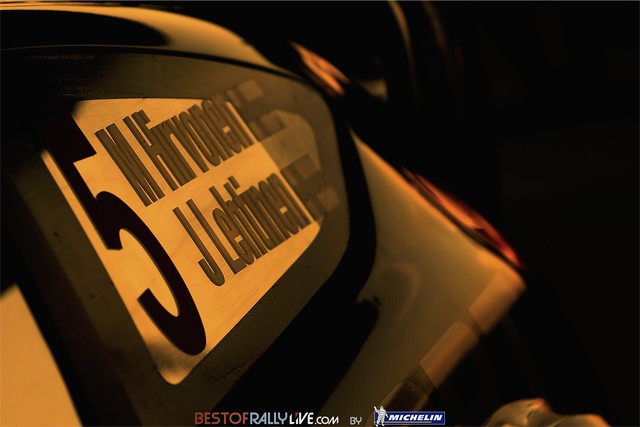
    Rally Poland: Une envie de pierogi / a yearning for pierogi


    Au nord de la Pologne, Mikolajki et la région des Grand Lacs de Mazurie accueillent le Rally Poland, qui réintègre le Championnat du monde des Rallyes WRC après cinq d’absence, en remplacement du mythique Rallye de l’Acropole.
    Une fois n’est pas coutume, je tenais à parler de mon attachement pour ce pays, la Pologne, que je découvre enfin à 40 ans passés. A l’entre-deux-guerres, mon arrière-grand-mère Senia, son mari et leurs deux filles avaient quitté Cracovie, à pied, en quête d’une vie meilleure, une vie de mineur, à l’Ouest.
    Le charbon français l’a rendue veuve, mais elle n’a jamais voulu quitter cette cité minière devenue glauque après la fermeture de la mine. A 90 ans, Senia était encore une femme joyeuse et pétillante, qui nous parlait de la Pologne en préparant despierogi. Sa fille, Marie, a aujourd’hui le même âge et les ravioles polonaises régalent encore toute la famille…
    Après Varsovie, la route 61 traverse un pays sans relief, de cultures, d’élevage et de forêts. Les villages, au nom que seule Senia aurait pu prononcer, se succèdent au fil de cette route monotone qui mène à la Mazurie, au nord de la Pologne, la région des Grands Lacs.
    A 250 kilomètres de la capitale, c’est la destination-nature des varsoviens, amateurs de pêche, de voile, de randonnées, de cueillette…. Ici, quelque 60 lacs sont reliés entre eux par des rivières et canaux. Mikolajki se situe sur l’un de ces bras reliant le lac Talty au lac Sniardwy, le plus grand, 113 km2.
    Avec son port de plaisance et ses innombrables campings, hôtels et luxueux resorts, Mikolajki est un village de vacances. Le parc d’assistance et le HQ du Rally Poland se trouvent à un kilomètre du centre-ville, dans un immense complexe hôtelier de près de 700 chambres comprenant un parc aquatique, un centre équestre, un casino, une patinoire et son propre port de plaisance !
    Malgré la pluie et les 12°C, il flotte donc comme un parfum de vacances sur ce rallye…
    This week’s Rally Poland takes teams to Mikolajki and the Masurian Lake District in the north of the country. After a five-year absence from the world championship, it has replaced Greece’s Acropolis Rally on the 2014 calendar.
    I have a strong family link with Poland which I am visiting for the first time this week as a 40-something-year old. Between the two World Wars, my great grandmother Senia, her husband and their daughters left Krakow, by foot, in a bid to find a better life – that of a miner – in the west.
    French coal made her a widow but she never wanted to leave the now gloomy mining town that became her new home. At the age of 90, she was still as perky as ever and her eyes always lit up whenever she talked about Poland while making pierogi. Today, her daughter Marie has the same age and the delicious dumplings she continues to make remain a family favourite.
    Highway 61 heads north out of Warsaw across an expanse of flat land given over to farms and forests. The villages have names that only Senia could have pronounced and follow on from each other with monotonous regularity along this road which eventually leads to Masuria and the region’s famous lake district, around 250km from the capital.
    It is a favoured spot for fans of fishing, sailing and hiking and boasts some 60 lakes which are linked by rivers and canals. Mikolajki sits on one of these waterways which runs from Lake Talty to the biggest of them all, Lake Sniardwy (113 square kilometres).
    Mikolajki is a booming tourist attraction with a harbour and countless campsites, hotels and luxury holiday resorts. Rally Poland’s service park and HQ are located about a kilometre from the centre in a huge hotel complex which boasts almost 700 rooms, a water theme park, riding stables, a casino, a skating rink and its own harbour!
    It’s raining and the temperature is just 12°C, but there’s a distinct holiday air about this rally.